From the loom
The Journal
Stories from our weavers, care guides, and notes on the journey from the Kerala loom to your home.
Your Clothes Need Different Kinds of Care
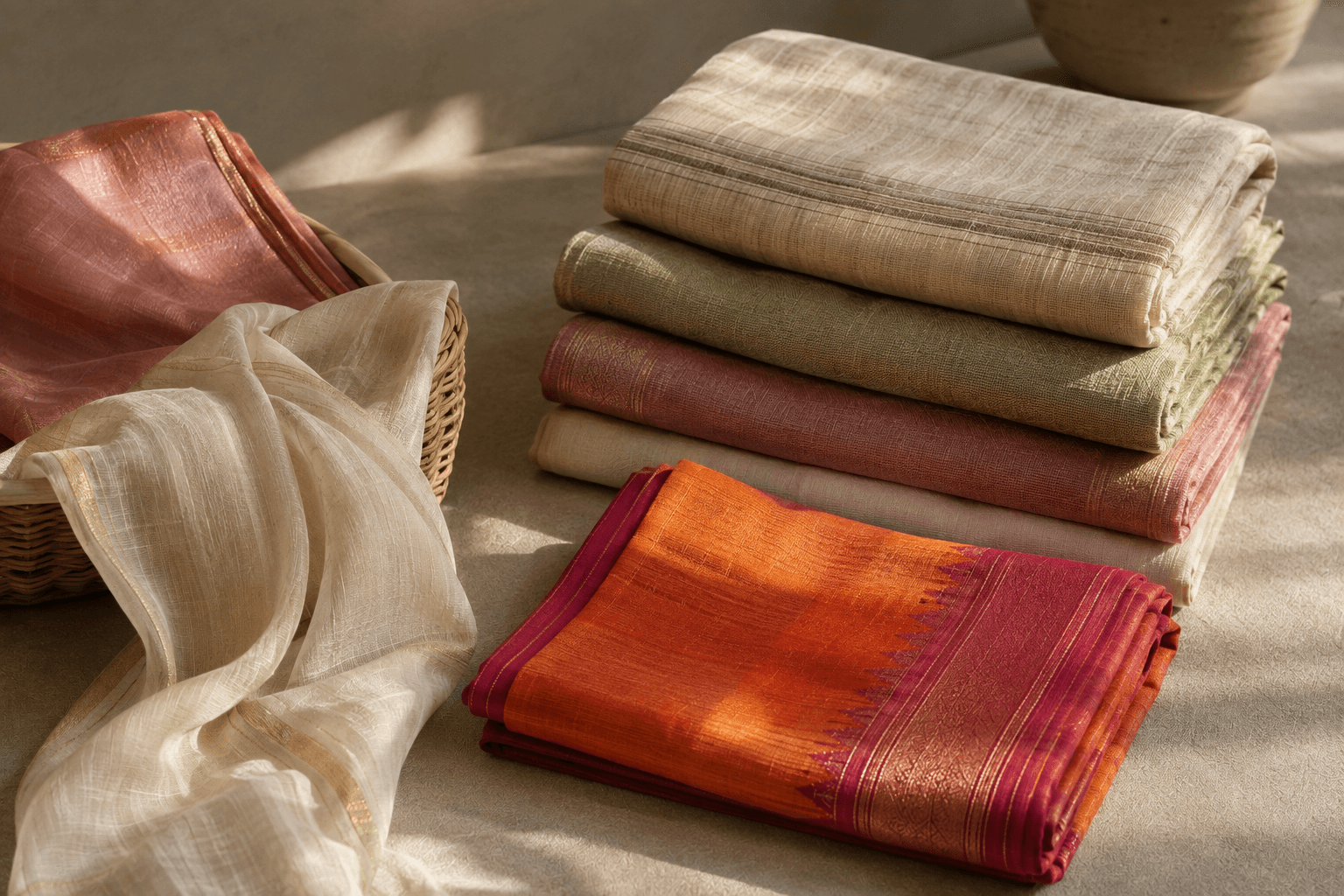
Caring for What You Own A linen shirt and a mul cotton saree may both feel light and comfortable. But they don’t necessarily want to be washed, dried or stored in the same way. We often treat clothing as though it were all made from the same thing. Put everything in the wash. Add detergent. Dry it. Fold it. Put it away. Repeat. But fabrics have different personalities. The way a garment is made, the fibres it contains, the weave, the dye and any finishing applied to it can all affect how it responds to washing, heat, friction and storage. And sometimes, clothes don’t become old because they were poorly made. They become old because we asked too much of them. Linen doesn’t need to be treated like cotton Linen has a naturally structured character. It creases easily, and its texture changes with wear. It doesn’t need to be treated as though every crease is a problem that must be removed. Gentle washing, appropriate drying and avoiding unnecessary heat can help preserve the fabric over time. And because care instructions can vary between garments, the label or maker’s guidance should always come first. The goal isn’t to keep linen looking untouched. It is to let it age well. Mul cotton needs its own consideration Mul cotton is delicate and exceptionally light. Its softness is part of what makes it beautiful, but that also means it can be more vulnerable to rough handling than a heavier cotton fabric. Aggressive scrubbing, excessive wringing or unnecessarily harsh washing can put more stress on a lightweight fabric. Gentler handling can help preserve the softness and structure that made you choose it in the first place. And handloom is not simply another word for “wash carefully” Handwoven fabrics can have their own characteristics depending on the fibre, weave, dye and finishing. There isn’t one universal care method for every handloom textile. A handwoven cotton saree and a handwoven silk saree are not interchangeable just because both came from a handloom. The loom tells us how the cloth was made. It doesn’t tell us everything about how the cloth should be cared for. That distinction matters. Care is part of a garment’s lifespan We often talk about buying better clothes as though the story ends at the checkout. It doesn’t. The life of a garment continues through every wash, every drying cycle, every time it is folded and stored, and every time it is worn. Too much heat can affect some fabrics. Too much friction can weaken or distort them. Harsh cleaning can affect fibres and colours. Improper storage can expose textiles to moisture, insects or other forms of damage. None of this means clothing needs to be treated like something fragile and precious. It simply means it is worth knowing what you own. Before washing, pause. Read the care label. Look at the fabric. Think about how it has been made. If you’re unsure, choose the gentler approach rather than assuming every garment can tolerate the same treatment. And when something needs specialist care, let the material — not convenience — make that decision. The small habits matter A garment doesn’t usually deteriorate because of one ordinary wash. It is often the accumulation of small things. A little too much heat. A little too much detergent. A little too much friction. A little too much washing. Repeated hundreds of times. The same is true in the other direction. Gentler washing. Proper drying. Thoughtful storage. Wearing something often, but not abusing it. Small decisions repeated over years can make a difference. A well-made garment gives us the possibility of a long life. Care is what helps us realise it. Because buying something good is only the beginning. Keeping it good is part of owning it.
Read the story →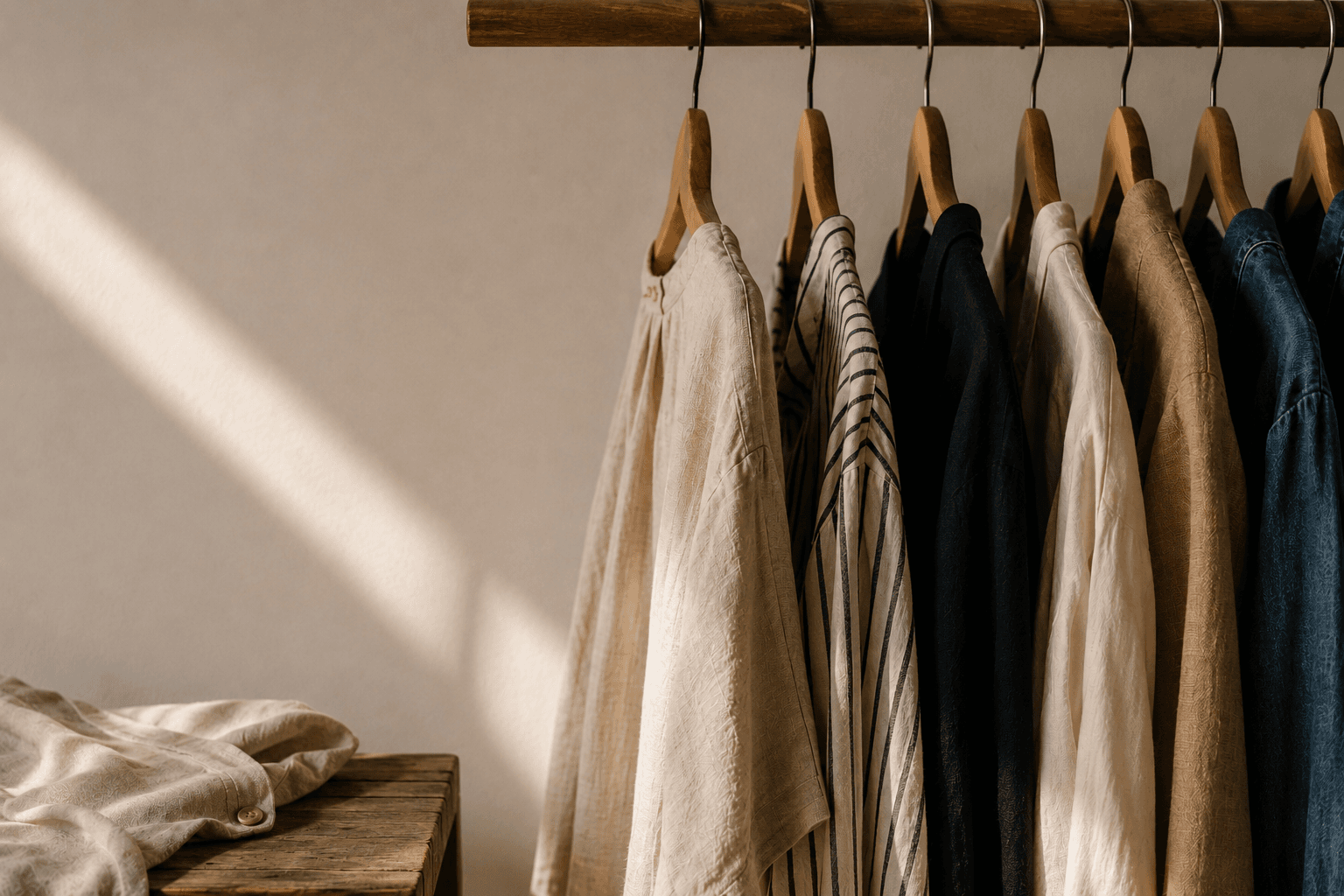
Will You Still Be Wearing It Next Year?
A low price can make a piece of clothing feel like an easy decision. It looks good. It is everywhere. And if it doesn’t last very long, perhaps it doesn’t feel like a great loss. But there is another way to look at that purchase. What if the question isn’t “How little did I pay for this?” What if it is: “How long will this stay in my wardrobe?” Clothes are not meant to exist only for the moment we buy them. Before a garment reaches us, its fibre has already been grown or produced, turned into yarn, made into fabric, dyed or finished, cut and stitched. There is material, energy, water, labour and transportation involved in getting it from raw material to our wardrobe. When a garment wears out quickly, all of that has been invested in something with a very short life. This is one of the less visible problems with fast fashion. The concern isn’t simply that clothes are inexpensive. It is that a system built around speed and low prices can encourage clothing to be made, bought and replaced quickly. Sometimes, that means choosing materials and construction that are adequate for a low price rather than intended for years of wear. A fabric may become thin. A seam may weaken. The surface may lose its appearance after repeated washing. A shape may stop holding. And eventually, the garment is no longer something we want to wear. So we buy another. What makes a garment last? There isn’t one magic material that guarantees longevity. A good garment begins with a suitable fibre and fabric, but it also depends on how that fabric has been woven or knitted, how the garment has been cut and stitched, the quality of the seams and finishing, and how it is cared for afterwards. Natural fibres such as cotton, linen and wool can make beautiful, durable clothing when they are appropriately produced and constructed. But simply seeing the words “100% natural” on a label doesn’t tell you everything about how long a garment will last. The same is true of price. Expensive does not automatically mean well made. Cheap does not automatically mean poorly made. The better habit is to look a little closer. Feel the fabric. Look at the seams. Check how the garment is finished. Consider whether the fabric seems appropriate for how you intend to wear it. Ask yourself whether you can imagine washing, wearing and reaching for it repeatedly. These small observations can change the way we shop. The better question We often compare clothes by their price. Perhaps we should sometimes compare them by their life. A garment worn once and discarded has had a very different journey from one worn every week for five years. And a garment that becomes softer, more comfortable or more familiar with use can become more valuable over time, even if it was never the most exciting thing in the wardrobe on the day it was bought. This doesn’t mean every purchase has to be serious. Clothes can still be fun. We can still experiment with colour, silhouettes and new ideas. But there is something worth being more selective about: the things we expect to stay. Before buying, perhaps ask: What is this made from? How well is it made? Will it withstand the way I intend to wear and wash it? Am I likely to wear it many times? If it costs a little more, could I keep it for much longer? Sometimes spending more on a well-made piece means buying fewer replacements later. And sometimes the most thoughtful choice isn’t the most expensive one at all. It is simply the piece that is made well, chosen carefully and worn often. Because clothing shouldn’t have to be disposable to be affordable. And perhaps the real value of a garment isn’t how quickly we can replace it. It’s how long we can keep choosing it.
Read the story →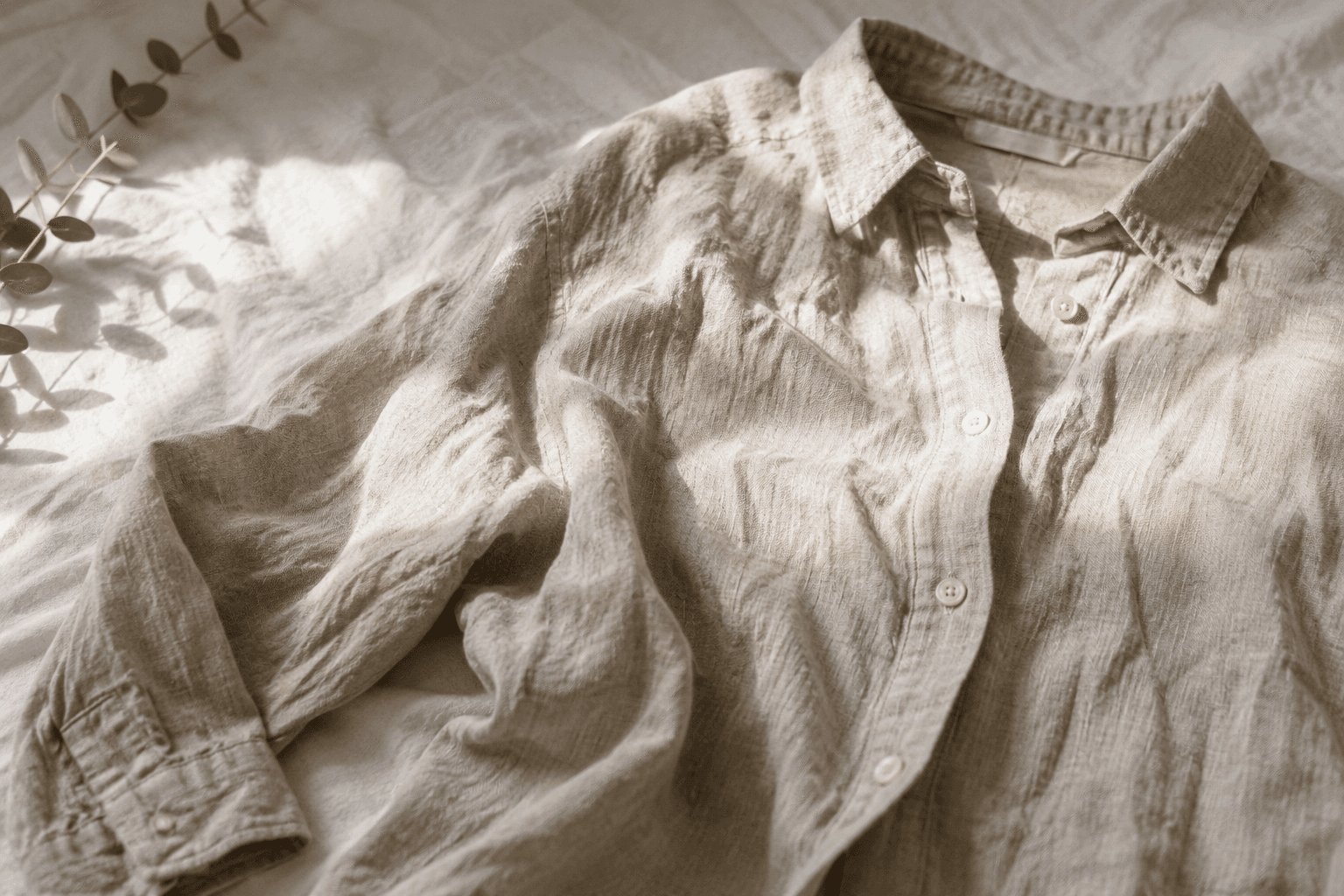
Why Does Linen Crease?
You iron linen. You put it on. You sit down. And there it is again. The crease. It can be tempting to think of this as something linen does wrong. But creasing is less a flaw than a characteristic of the fabric. Linen is made from the fibres of the flax plant. Those fibres are relatively stiff compared with some other common textile fibres, and linen fabric has a particular structure and behaviour that allows it to crease noticeably when it is folded, bent or compressed. When you sit, move your arms or simply wear a linen garment through the day, parts of the fabric are pushed out of their original position. The fabric doesn’t always immediately return to how it looked when freshly pressed. So the creases stay. This is also why freshly ironed linen and linen after a few hours of wear can look like two slightly different fabrics. One is crisp. The other has begun to take on the movement of the person wearing it. There is another reason linen’s creases can become part of its appeal: they give the fabric texture. Unlike a perfectly smooth synthetic surface, linen often looks better when it is allowed to retain some of its natural character. The slight rumpling gives it softness visually, even when the fabric itself has a distinctly structured feel. That doesn’t mean linen should never be ironed. If you prefer a sharper appearance, you can certainly press it. But it is worth knowing that keeping linen completely crease-free is not really the point. The crease will return. And perhaps that is okay. We often expect clothes to remain exactly as they looked when we bought them. We press away the wrinkles, remove every sign of wear and try to preserve the idea of newness. But some fabrics were never meant to look untouched. Linen changes as it is worn. Its creases are part of that change. Maybe the better question isn’t: How do I stop linen from creasing? Maybe it is: How much of the fabric’s character am I willing to let remain visible?
Read the story →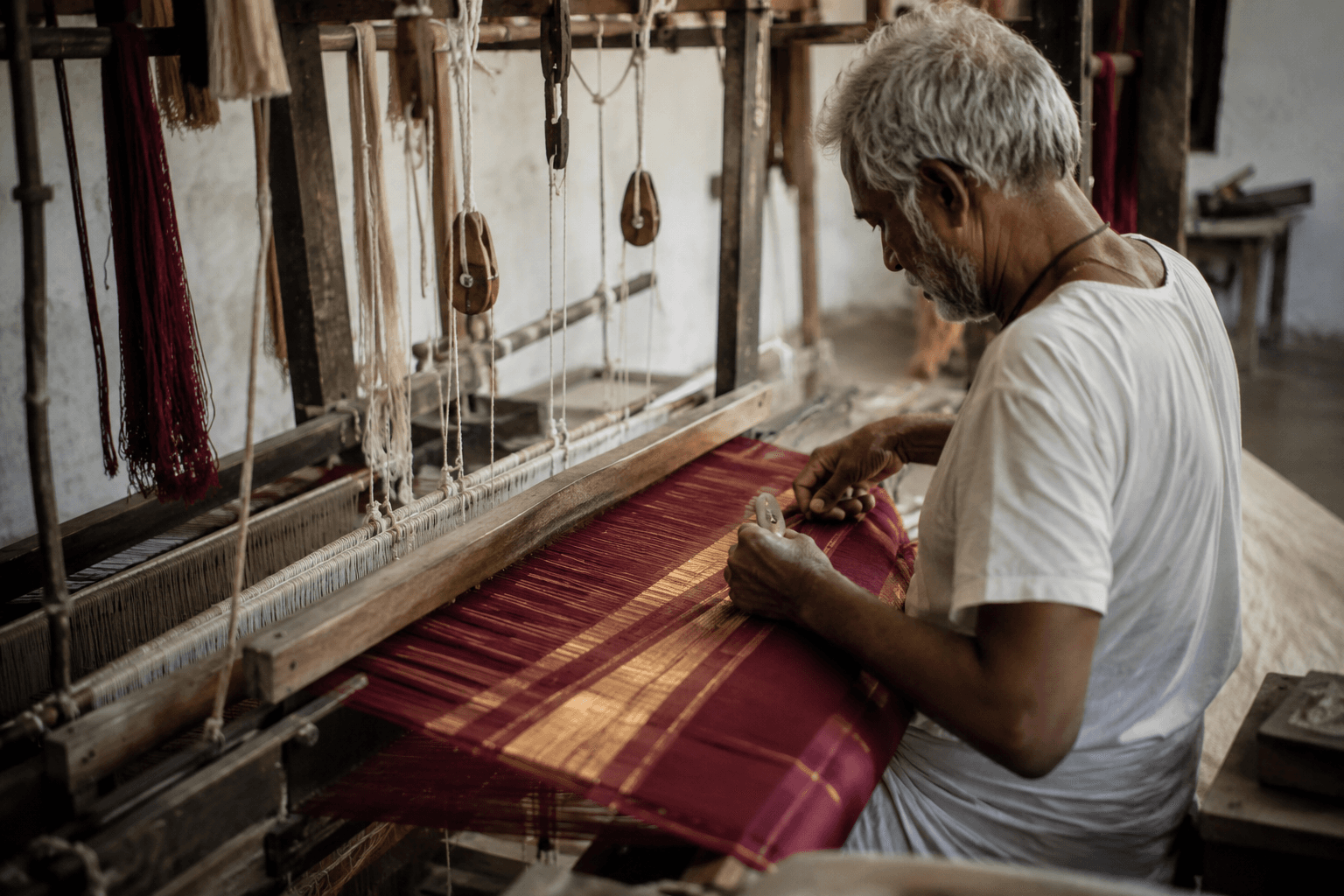
What Does It Take to Make One Saree?
A saree can look simple when it is folded on a shelf. Six yards of cloth. A border. Perhaps a little colour, a little pattern. But before it becomes something we wear, there is a much longer story. It begins with fibre. The fibre is spun into yarn, and that yarn needs to be prepared before it can meet the loom. Depending on the textile, this can involve cleaning, spinning, winding, sizing, dyeing and arranging the yarns in preparation for weaving. Then comes the loom. A handloom is not simply a machine that turns thread into cloth. It is a system that has to be carefully prepared before weaving can begin. Threads are arranged in precise order, tensioned correctly and passed through the loom according to the structure and design of the fabric. Only then does weaving begin. The weaver works with the warp — the threads running lengthwise — and the weft, which travels across them. With every movement of the loom, another small section of cloth takes shape. It can look repetitive from a distance. It isn’t. The weaver is constantly paying attention: to tension, alignment, pattern, colour and the behaviour of the yarn. A small problem can require adjustment. A change in design may require a different sequence of movements. And the saree slowly grows. This is one reason handwoven cloth can carry small variations. A slightly different line. A subtle change in texture. A tiny irregularity in the weave. These aren’t necessarily mistakes. They can be evidence of the process itself. Once the weaving is complete, the saree may still need finishing, depending on the textile and how it has been made. Loose threads are checked, the fabric is prepared, and it is readied for the person who will eventually wear it. So when we say that a saree takes time to make, we are not talking only about the hours spent at the loom. We are talking about everything that came before the first thread was woven — and everything that happens after the last one. The finished saree hides most of this work. Perhaps that is part of its beauty. We see a piece of clothing. Behind it is fibre, yarn, preparation, technique, attention, repetition and time. The next time you unfold a saree, it may be worth looking at it for a little longer. Not just as something beautiful. But as something that had to be made.
Read the story →